
KAT6/7
Targeting epigenetic vulnerabilities through dual inhibition of KAT6 and KAT7 to drive synthetic lethality in cancer.
Targeting epigenetic drivers of cancer
Cancer is driven not only by genetic mutations, but also by dysregulation of epigenetic machinery that controls gene expression.1
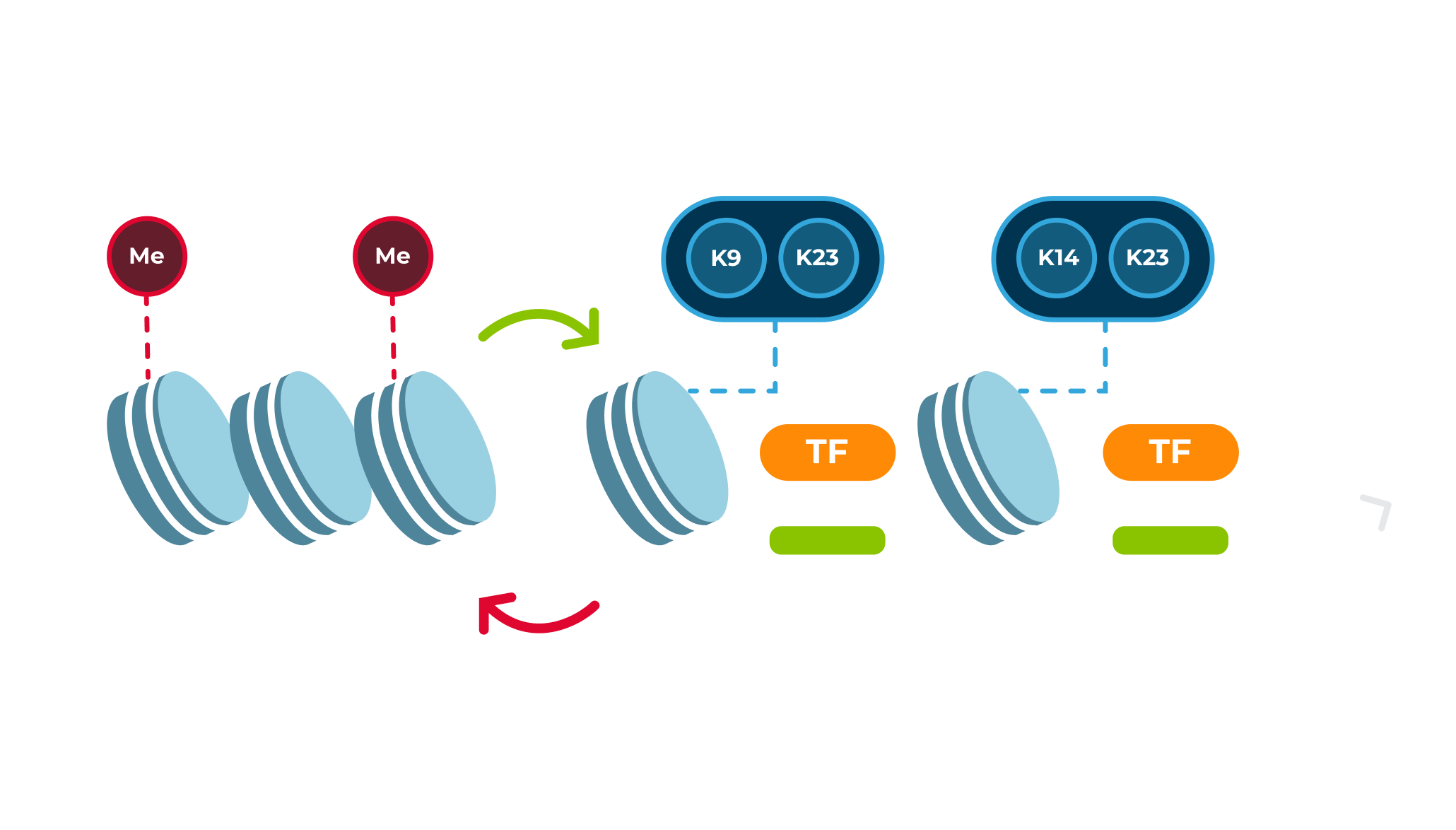
KAT6 and KAT7 are lysine acetyltransferases that regulate how DNA is packaged and accessed. By opening chromatin structure, they enable activation of genes that promote tumor growth—and are often upregulated in cancer.2,3
Targeting either enzyme alone is often insufficient, as functional overlap enables tumor cells to compensate and survive.4,5
Turning epigenetic redundancy into therapeutic vulnerability
IDEAYA is advancing a dual-inhibition strategy to convert this redundancy into a precision therapeutic opportunity. By simultaneously targeting KAT6 and KAT7, this approach with IDE574 creates a synthetic lethal state that disrupts tumor cell gene regulation and survival.4