Authored by: Stu Dorman, Chief Commercial Officer, IDEAYA Biosciences
Every year, the ASCO Annual Meeting offers a glimpse into the future of cancer care. Researchers, clinicians, biotech innovators, and patient advocates gather to share new data, debate emerging science, and explore what’s next for patients facing some of the most challenging diseases.
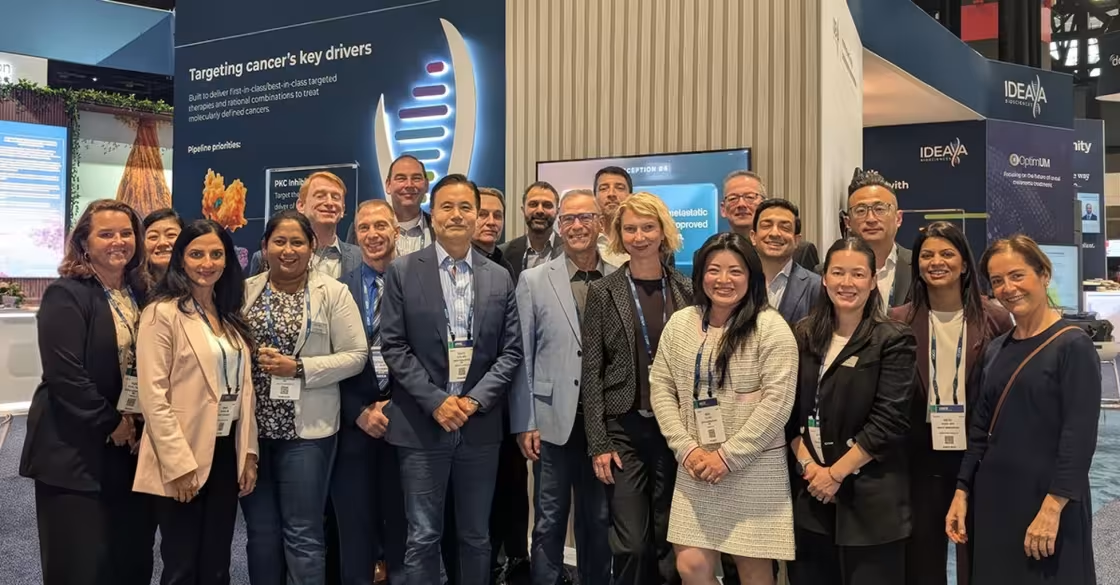
For me, one of the most memorable moments of ASCO 2026 was attending the late-breaking oral presentation of the OptimUM-02 study. Seeing the packed conference auditorium, hearing the reactions to the positive data that were presented, and listening to the discussion that followed left me with an overwhelming sense of gratitude—for the patients who gave so much to participate in the study, for the investigators and research teams whose partnership made the work possible, and for the IDEAYA colleagues whose innovation, commitment, and perseverance continue to help advance a novel approach in an area of significant unmet need.
The moment served as a powerful reminder that behind every data presentation are years of scientific work, countless hours of collaboration, and, most importantly, patients who place their trust in the research community to help advance new treatment options.
A defining moment for IDEAYA and its lead candidate
ASCO 2026 marked an important milestone for IDEAYA with the presentation of data from the OptimUM-02 trial evaluating our investigational medicine. Throughout the meeting, there was also considerable interest in the future of targeted therapies in genetically defined cancers. While every development program follows its own path, it was encouraging to see the oncology community engage deeply with both the science and the potential implications for patients.
The conversations taking place throughout ASCO reflected a broader trend shaping oncology today: growing confidence that precision medicine approaches can identify the right therapies for the right patients and deliver meaningful clinical benefit.
Advances in molecular profiling and biomarker identification are enabling researchers to better understand the biological drivers of disease and develop therapies designed to address them. This shift continues to transform how we think about drug development and, ultimately, how patients may be treated.
For those of us at IDEAYA, the presentation of the OptimUM-02 data represented more than a scientific milestone. It reflected the power of our approach—thinking innovatively about how serious cancers can be targeted and treated—and reinforced our belief that this work can help propel progress across our broader pipeline.
The importance of this work
Despite the remarkable science presented at ASCO, some of the most meaningful moments happened outside the presentation halls.
Throughout the meeting, I had the opportunity to meet with experts across disciplines, hear different perspectives, and discuss both the opportunities and challenges facing oncology today. Whether the conversations focused on practice-changing data, emerging scientific trends, or future treatment paradigms, a common theme emerged: we are making meaningful progress against a disease that affects millions of patients and families around the world.
What struck me most was not any single dataset, but the collective momentum across the field. Having attended more than 15 ASCO meetings throughout my career, I've had the opportunity to watch oncology evolve firsthand. This year, as I caught up with former colleagues and longtime peers, I was reminded that the optimism surrounding recent advances extends far beyond any one company or program. Whether the conversation centered on IDEAYA's work, groundbreaking pancreatic cancer data, or other important developments, there was a genuine excitement for what these advances could mean for patients. Despite the competitive nature of our industry, ASCO reinforced a simple truth: progress in oncology is driven by a foundational commitment of the entire community, united by a common purpose—to improve the lives of people facing cancer.
How the field is accelerating forward
Importantly, progress in cancer research is rarely linear. While breakthrough results often receive the most attention, studies that do not achieve their intended outcome are equally important to advancing the science. Every clinical trial contributes valuable knowledge, helping researchers better understand disease biology, refine future approaches, and inform the next generation of research.
That ongoing cycle of learning is one of the reasons this is such a remarkable era in oncology. Researchers are uncovering new biological insights, identifying novel therapeutic targets, and developing increasingly sophisticated approaches to treatment. Each study adds another piece to the puzzle and helps move the field forward.
As I left ASCO this year, I was struck not only by the quality of the science, but by the collective determination across our industry to continue pushing the boundaries of what is possible for patients. We are living through a remarkable period of oncology innovation. While significant challenges remain, the pace of progress continues to accelerate, creating new possibilities for patients and families and reinforcing hope for the future of cancer care.